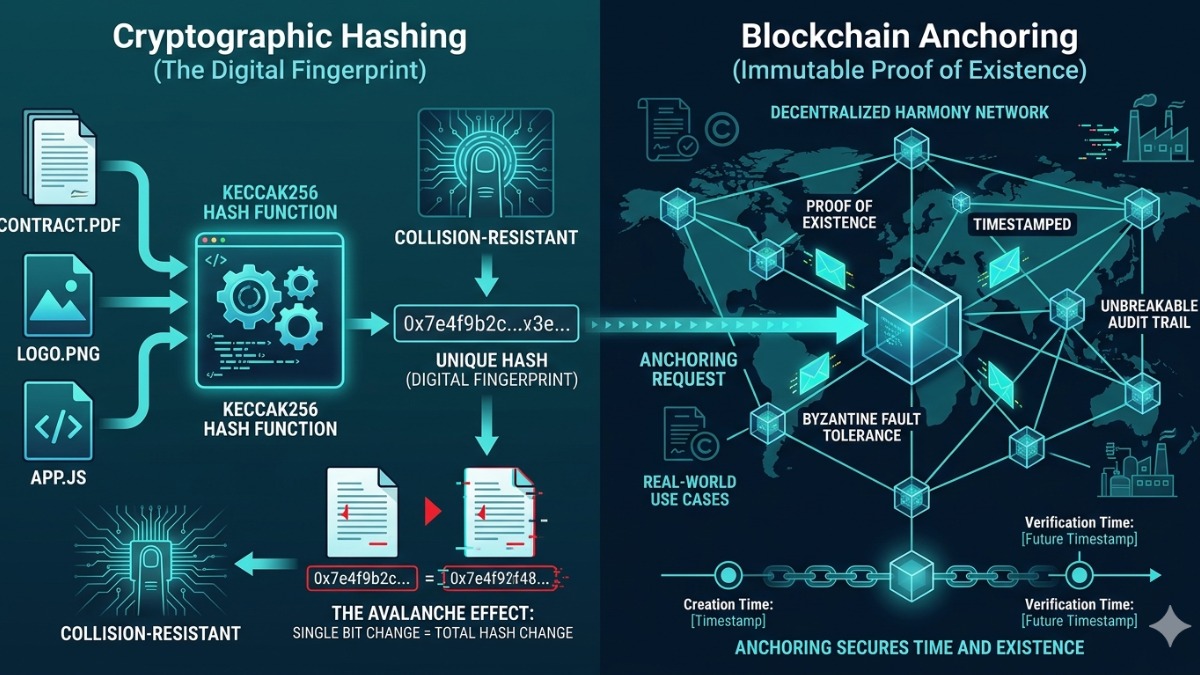
Blockchain is more than just a buzzword; it is a decentralized, distributed ledger technology that records transactions across many computers. This ensures that any involved record cannot be altered retroactively, without the alteration of all subsequent blocks.
1. Decentralization
Unlike traditional databases managed by a central authority (like a bank), a blockchain is maintained by a network of nodes. This removes the "single point of failure" and increases transparency.
2. Immutability
Once a "block" of data is encrypted and added to the chain, it becomes permanent. Using cryptographic hashing, the system ensures that tampering with data is mathematically impossible without detection.
3. Smart Contracts
Beyond simple transactions, modern blockchains like Harmony or Ethereum support "Smart Contracts" self-executing code that triggers actions when predefined conditions are met, eliminating the need for intermediaries.